PRODUCTS
CONTACT US
TEL: +86-532-85754589,85775618
FAX: E-Mail
E-MAIL: tlead.net@gmail.com; tlead.net@hotmail.com

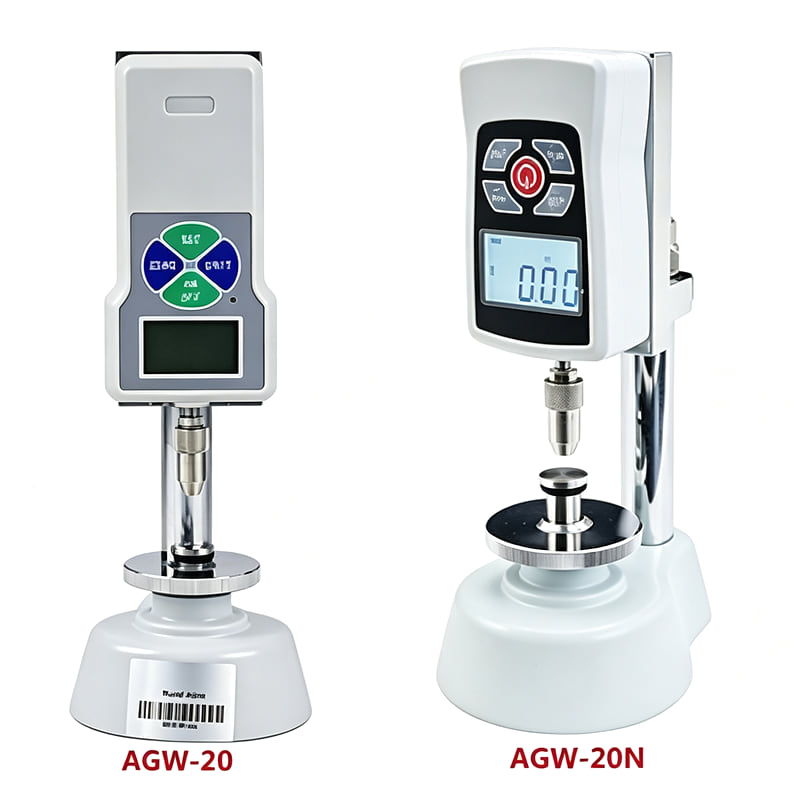
Portable hardness measurement up to 20 kg / 196 N
Keywords: grain hardness tester, feed pellet hardness tester, digital grain hardness tester, grain hardness meter with peak mode, agricultural grain testing instrument
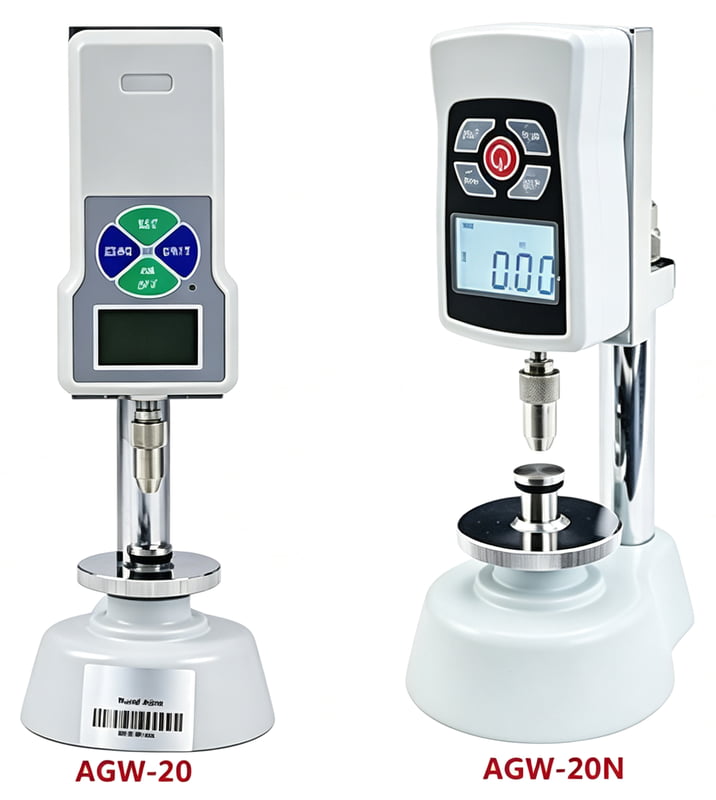
1. Measures grain and feed pellet hardness up to 20 kg (196 N).
2. Switchable kg and N units with a 0.01 kg / 0.1 N load division value.
3. Real-time and peak modes support live readings and maximum-force capture.
4. Internal load cell and digital display for straightforward testing.
5. Compact design for field or laboratory use.
6. Short-circuit, leakage, and overload protection.
7. Automatic shutoff after 10 minutes without operation.
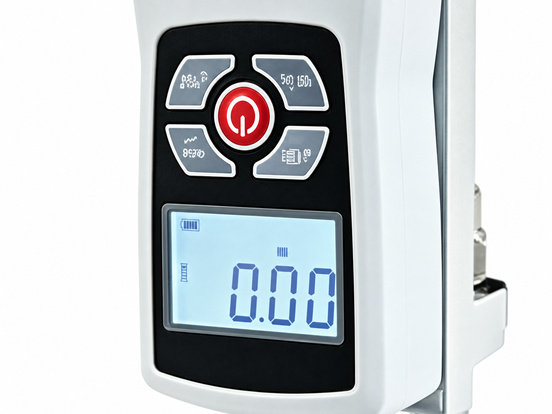
Backlit lcd display and control keypad | 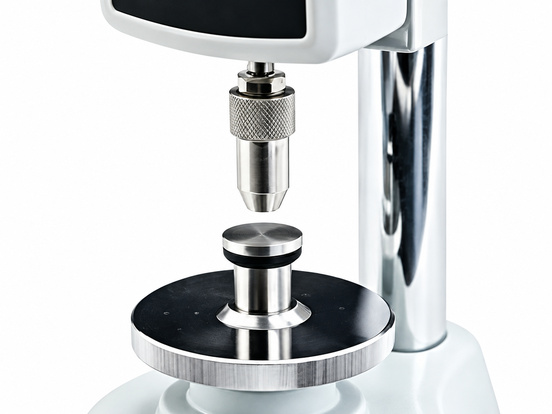
Measurement head and sample platform | 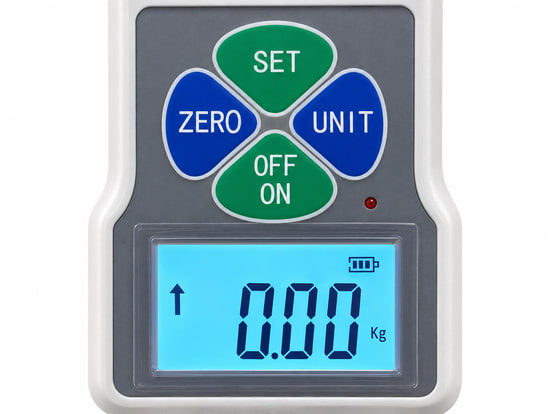
Controls corrected |
| Parameter | Specification |
|---|---|
| Maximum load | 20 kg / 196 N |
| Load division value | 0.01 kg / 0.1 N |
| Load cell | Internal |
| Accuracy | ±2% |
| Display units | kg and N, switchable |
| Measurement modes | Real-time and Peak |
| Display | Digital |
| Auto power-off | After 10 minutes without operation |
| Protection | Short-circuit, leakage, and overload protection |
| Operating temperature | 5–35 °C |
| Transport temperature | −10–60 °C |
| Relative humidity | 15–80% RH |
| Working environment | Keep away from strong light sources and corrosive media |
| Parameter | AGW-20 | AGW-20N |
|---|---|---|
| Power supply | Built-in 3.7 V lithium battery | 2 × AAA batteries |
| Charging | Rechargeable; approx. 4–6 hours | Not applicable |
| Continuous use | Approx. 15 hours | — |
| Battery cycle life | At least 300 charge cycles | — |
| Charger input / output | AC 100–240 V, 50/60 Hz / DC 5 V, 1,000 mA | — |
1. Hardness checks for grains such as wheat and rice.
2. Feed pellet hardness testing during production and quality checks.
3. Agricultural research, teaching, and laboratory evaluation.
4. On-site sampling and bench-top testing.