

PRODUCTS
CONTACT US
TEL: +86-532-85754589,85775618
FAX: E-Mail
E-MAIL: tlead.net@gmail.com; tlead.net@hotmail.com

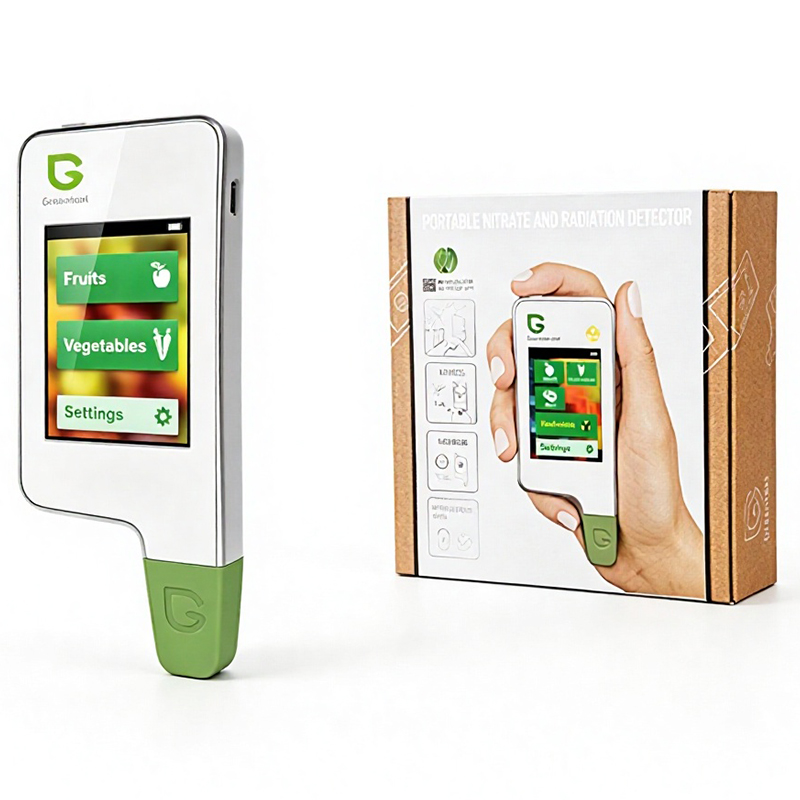
Nitrate Tester
Keywords: nitrate tester, vegetable nitrate meter, fruit nitrate detector, food safety tester, portable nitrate tester
Chemical-free nitrate screening in about three seconds, with a 30–9999 mg/kg range and an 85 g pocket body.
The Greentest 1 is a pocket-sized nitrate tester for vegetables and fruits. It is the 2-in-1 model of the Greentest nitrate tester series and works without any chemical reagent: the probe applies a precisely regulated electrical current to the specimen, and the built-in algorithm converts the measured electrical conductivity into a nitrate reading in mg/kg. Results appear on a 320×240 TFT color display in about three seconds.
The series covers five order numbers so that one platform can be matched to different testing needs: Greentest 1 tests vegetables and fruits (2 in 1), Greentest 2F adds meat and fish (4 in 1), Greentest 3F adds water TDS as well (5 in 1), and Greentest ECO 4F / ECO 6 add background radiation and timer functions (6 in 1). All models share the same 85 g body, USB charging and up to six hours of operation.
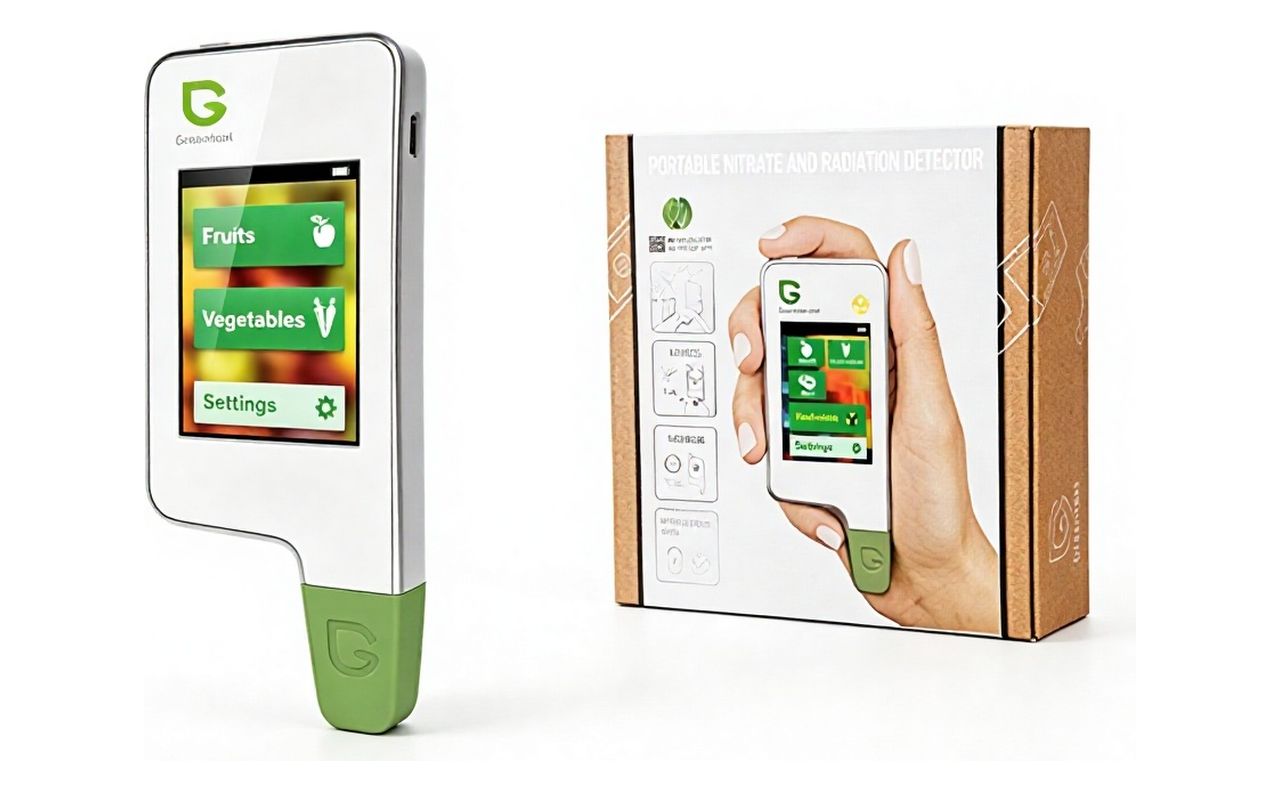
Greentest 1 Nitrate Tester | 3s Vegetable Fruit Tester
1. 2-in-1 Testing — measures nitrate in vegetables and fruits with a single device, so produce checks no longer need separate instruments.
2. Three-Second Reading — a complete measurement takes about 3 seconds, which keeps screening fast enough for routine use.
3. Wide Detection Range — covers 30–9999 mg/kg of harmful substance concentration, from lightly contaminated to heavily contaminated samples.
4. Chemical-Free Method — the probe applies a precisely regulated electrical current to the specimen; no reagent, strip or sample preparation is required.
5. Proprietary Algorithm — nitrate content is calculated by comparing the specimen's electrical conductivity against a database obtained from mass spectrometer testing of similar specimens under laboratory conditions.
6. Pocket Portability — 122×52×14 mm and only 85 g, so the tester fits in a pocket and can be carried to markets, farms or kitchens.
7. Long Runtime and USB Charging — Li-Ion battery provides up to 6 hours of use, and the tester can also run from USB at 5 V / 250 mA.
8. TFT Color Display — 320×240 color screen with an intuitive interface for quick reading of results.
9. Expandable Series — the 2F, 3F, ECO 4F and ECO 6 models extend the same platform to meat, fish, water TDS, background radiation and timer functions.
1. Prepare the Specimen — take a clean vegetable or fruit sample to be tested.
2. Apply the Probe — bring the probe into contact with the specimen; it applies a precisely regulated electrical current.
3. Wait About 3 Seconds — the proprietary algorithm compares the conductivity of the specimen against its laboratory database.
4. Read the Result — the nitrate concentration is displayed in mg/kg on the TFT color screen, ready to be compared with reference values.
 Close-up of the control and display area. |  Detail view of the body, finish and markings. |  Close-up of the connections and mounting section. |
| Model | Greentest 1 (2-in-1: vegetables + fruits) |
| Series Order Numbers | Greentest 1 (2 in 1), Greentest 2F (4 in 1), Greentest 3F (5 in 1), Greentest ECO 4F (6 in 1), Greentest ECO 6 (6 in 1) |
| Harmful Substance Range | 30–9999 mg/kg |
| TDS Measurement Range | 0–999 ppm (models with water TDS) |
| Background Radiation Range | 0–9.99 µSv/h (models with radiation measurement) |
| Measurement Time | About 3 seconds |
| Measurement Error Margin | 5–40%, typically below 22.5% |
| Power Source | Li-Ion battery; additional USB power |
| Charging Current | 250 mA (battery charge and USB charge) |
| Power Voltage Range | 5 V |
| Usage Time | Up to 6 hours |
| Display | TFT color display, 320×240 resolution |
| Dimensions | 122×52×14 mm |
| Weight | 85 g |
| Operating Temperature | 0–50 °C |
1. Home food safety screening of vegetables and fruits before cooking or serving.
2. Produce quality checks on farms, in greenhouses and at harvest intake points.
3. Fresh produce inspection in markets, grocery stores and distribution centers.
4. Ingredient screening in restaurant, catering and school kitchen operations.